

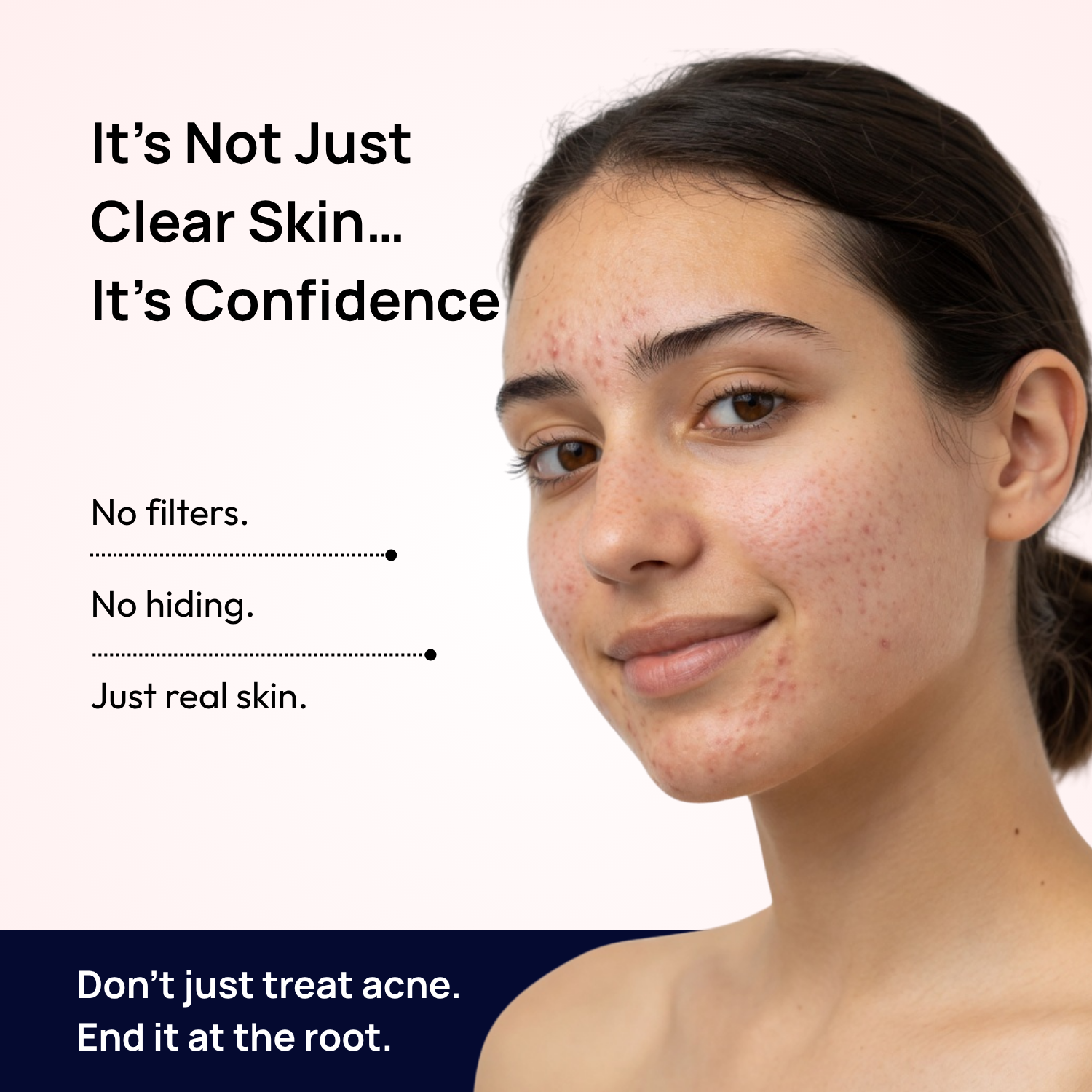
Our Philosophy
At Monoskin.health, we believe clear skin is not just about what you put on your face ,it's about what you put in your body too. Every ingredient across our entire range has been carefully chosen based on peer-reviewed clinical research, dermatological studies, and proven scientific evidence.
We don't follow trends. We follow science.
The Inside-Out Approach, Why It Works
Most acne treatments only address the surface. But acne is not just a skin problem, it's a whole-body problem.
Research published in Gut Pathogens (Bowe & Logan, 2011) established the gut-skin axis, a direct link between gut health and acne severity. When your gut microbiome is imbalanced, it triggers systemic inflammation that shows up on your skin as breakouts, redness, and excess oil.
This is why our complete range works on three levels simultaneously:
-
Outside
Cleanser: removes impurities & unclogs pores
Acne Calm Serum: targets active breakouts
UV-Pur Sunscreen: prevents UV-triggered pigmentation
-
Inside
Acne Detox Gummies: balances gut & reduces inflammation
Sea Buckthorn+: repairs skin barrier from within
L-Glutathione: brightens & detoxes from within
-
Protection
UV-Pur Sunscreen: shields & prevents dark spots
Clear Biotics: restores gut microbiome
L-Glutathione: antioxidant defence
Clinical Research References — By Benefit
1. Fighting Acne-Causing Bacteria
Ingredients: Zinc Gluconate, Zinc Sulphate, Tea Tree Extract, Curcumin, Salicylic Acid, Bacillus Coagulans
📖 Cunliffe, W.J. et al. (1979) — British Journal of Dermatology "Zinc gluconate demonstrated significant antibacterial activity against Cutibacterium acnes, the primary bacteria responsible for acne formation."
📖 Hammer, K.A. et al. (1999) — Journal of Applied Microbiology "Tea Tree Oil exhibited strong antimicrobial activity against Cutibacterium acnes, making it an effective natural alternative to benzoyl peroxide."
📖 Vaughn, A.R. et al. (2016) — Phytotherapy Research "Curcumin (95% extract) demonstrated potent antibacterial properties against acne-causing bacteria while simultaneously reducing inflammatory response."
📖 Arif, T. (2015) — Clinical, Cosmetic and Investigational Dermatology "Salicylic Acid effectively penetrates and dissolves lipid bonds trapping bacteria inside clogged pores, reducing acne colonisation."
📖 Majeed, M. et al. (2016) — ISRN Nutrition "Bacillus coagulans supplementation significantly reduced systemic inflammation markers linked to acne-causing bacterial overgrowth."
2. Reducing Inflammation & Redness
Ingredients: Curcumin, Centella Asiatica, Aloe Vera, Selenium, Sea Buckthorn, Azelaic Acid, Green Tea Extract, Lacticaseibacillus Paracasei
📖 Ramos-e-Silva, M. et al. (2012) — Clinics in Dermatology "Centella Asiatica demonstrated significant anti-inflammatory activity, reducing redness and swelling associated with acne lesions."
📖 Surjushe, A. et al. (2008) — Indian Journal of Dermatology "Aloe Vera's active compounds including anthraquinones and polysaccharides exhibit strong anti-inflammatory and skin-calming properties."
📖 Olas, B. (2016) — Advances in Nutrition "Sea Buckthorn berry compounds significantly reduced oxidative stress and skin inflammation markers, supporting its use in acne management."
📖 Michaelsson, G. & Edqvist, L.E. (1984) — Acta Dermato-Venereologica "Selenium supplementation combined with Vitamin E significantly reduced inflammatory acne lesions in deficient patients."
📖 Katiyar, S.K. (2011) — Archives of Biochemistry and Biophysics "Green Tea Extract's EGCG compound demonstrated powerful anti-inflammatory activity, reducing UV-induced and acne-related skin inflammation."
📖 Benyacoub, J. et al. (2013) — Journal of Investigative Dermatology "Lacticaseibacillus paracasei supplementation significantly reduced skin sensitivity, redness, and inflammatory response in clinical trials."
3. Controlling Oil & Sebum Production
Ingredients: Niacinamide, Pantothenic Acid, Zinc Sulphate, Salicylic Acid, Yashad Bhasma
📖 Draelos, Z.D. et al. (2006) — Journal of Cosmetic Dermatology "Niacinamide significantly reduced sebum production and inflammatory acne lesions over 8 weeks of supplementation."
📖 Yang, M. et al. (2014) — Lipids in Health and Disease "Pantothenic acid supplementation over 12 weeks led to a 67.5% reduction in total acne lesion count by regulating sebum through the CoA pathway."
📖 Verma, K.C. et al. (1980) — Acta Dermato-Venereologica "Zinc sulphate therapy produced marked reduction in sebum production and overall acne severity comparable to antibiotic treatment."
📖 Draelos, Z.D. (2006) — Journal of Drugs in Dermatology "Zinc Oxide (Yashad Bhasma) demonstrated significant sebum-regulating properties while providing broad-spectrum UV protection."
4. Unclogging Pores & Exfoliation
Ingredients: Salicylic Acid, Azelaic Acid, Carica Papaya Extract, Hydrolyzed Oats, Melafresh 4-Terpineol
📖 Arif, T. (2015) — Clinical, Cosmetic and Investigational Dermatology "Salicylic Acid, a beta-hydroxy acid, effectively penetrates and unclogs pores by dissolving the lipid bonds that trap dead skin cells and sebum."
📖 Draelos, Z.D. (2006) — Journal of Drugs in Dermatology "Azelaic Acid demonstrated dual action — effectively unclogging pores while simultaneously reducing Cutibacterium acnes colonisation."
📖 Food Chemistry (2016) "Papain enzyme from Carica Papaya demonstrated gentle keratolytic activity, effectively removing dead skin cells and preventing pore blockages."
📖 Kurtz, E.S. & Wallo, W. (2007) — Journal of Drugs in Dermatology "Colloidal oatmeal (Hydrolyzed Oats) demonstrated significant skin barrier support and gentle exfoliating properties without irritation."
📖 Carson, C.F. et al. (2006) — Clinical Microbiology Reviews "4-Terpineol, the primary active component of Tea Tree Oil (Melafresh), demonstrated superior antimicrobial and pore-clarifying activity."
5. Fading Dark Spots & Hyperpigmentation
Ingredients: Niacinamide, Vitamin C, Licorice Root Extract, Azelaic Acid, Sea Buckthorn, L-Glutathione, Pomegranate Extract, Vitamin A
📖 Hakozaki, T. et al. (2002) — British Journal of Dermatology "Niacinamide at 5% concentration significantly reduced hyperpigmentation and improved skin tone evenness over 8 weeks."
📖 Telang, P.S. (2013) — Indian Dermatology Online Journal "Vitamin C inhibits melanin synthesis, directly reducing post-inflammatory hyperpigmentation and acne-related dark spots."
📖 Amer, M. & Metwalli, M. (2000) — International Journal of Dermatology "Glabridin, the active compound in Licorice Root Extract, inhibited UVB-induced pigmentation by up to 50% and significantly reduced post-acne dark spots."
📖 Sonthalia, S. et al. (2016) — Indian Dermatology Online Journal "L-Glutathione demonstrated significant skin-brightening effects by inhibiting tyrosinase activity and shifting melanin production from dark eumelanin to lighter phaeomelanin."
📖 Afaq, F. et al. (2009) — Experimental Dermatology "Pomegranate Extract demonstrated potent inhibition of melanogenesis, significantly reducing UV-induced hyperpigmentation and post-acne dark spots."
📖 Sorg, O. (2014) — Dermato-Endocrinology "Vitamin A (Retinol) accelerates skin cell turnover, effectively fading post-inflammatory hyperpigmentation and acne marks."
6. Repairing & Strengthening the Skin Barrier
Ingredients: Sea Buckthorn, Ceramide Complex, Hyaluronic Acid, Panthenol, Squalene, L-Glutathione, Vitamin E, Allantoin
📖 Olas, B. (2016) — Advances in Nutrition "Sea Buckthorn's Omega-7 fatty acids restore the skin's lipid barrier and reduce transepidermal water loss."
📖 Elias, P.M. (2008) — Journal of Investigative Dermatology "Ceramides are essential components of the skin barrier. Ceramide-deficient skin is significantly more prone to acne, irritation, and inflammation."
📖 Papakonstantinou, E. et al. (2012) — Dermato-Endocrinology "Hyaluronic Acid maintains skin hydration and structural integrity, supporting barrier function and accelerating wound healing in acne-damaged skin."
📖 Ebner, F. et al. (2002) — European Journal of Medical Research "Panthenol demonstrated significant skin repair activity, accelerating epidermal regeneration and strengthening the compromised skin barrier."
📖 Keen, M.A. & Hassan, I. (2016) — Journal of Cutaneous and Aesthetic Surgery "Vitamin E demonstrated superior antioxidant protection of the skin barrier lipids, reducing oxidative damage and improving barrier integrity."
📖 Cosmetics & Toiletries Research (2010) "Allantoin demonstrated significant skin-soothing and barrier-repair properties, accelerating healing of acne-damaged skin."
7. Sun Protection & Preventing UV-Triggered Pigmentation
Ingredients: Yashad Bhasma (Zinc Oxide), Octyl Methoxycinnamate, Octyl Salicylate, Green Tea Extract, Melafresh
📖 Pinnell, S.R. et al. (2000) — Dermatologic Surgery "Zinc Oxide (Yashad Bhasma) provides superior broad-spectrum UVA and UVB protection, preventing UV-triggered melanin production and post-acne mark darkening."
📖 Diffey, B.L. (2001) — Methods in Enzymology "Octyl Methoxycinnamate demonstrated high-efficiency UVB absorption, significantly reducing UV-induced skin damage and hyperpigmentation triggers."
📖 Katiyar, S.K. (2011) — Archives of Biochemistry and Biophysics "Green Tea Extract provided significant photoprotection, reducing UV-induced oxidative damage and inflammation that worsens post-acne marks."
📖 Lim, H.W. et al. (2017) — Journal of the American Academy of Dermatology "Consistent broad-spectrum sunscreen use reduced post-inflammatory hyperpigmentation by up to 40% in acne-prone individuals."
8. Balancing Gut Health & Reducing Internal Acne Triggers
Ingredients: FOS 95 Prebiotic, Bacillus Coagulans, Lactobacillus Acidophilus, Bifidobacterium Bifidum, Bifidobacterium Lactis, Lactobacillus Rhamnosus, Lacticaseibacillus Paracasei
📖 Bowe, W.P. & Logan, A.C. (2011) — Gut Pathogens "The gut-skin axis plays a significant role in acne pathogenesis. Prebiotic and probiotic supplementation improved gut microbiome balance and reduced inflammatory skin conditions."
📖 Fabbrocini, G. et al. (2016) — Beneficial Microbes "Probiotic supplementation including Lactobacillus and Bifidobacterium strains reduced acne severity scores and sebum excretion rates over 12 weeks."
📖 Madempudi, R.S. et al. (2019) — Nutrients "Bacillus coagulans supplementation demonstrated significant improvement in gut microbiome diversity, reducing systemic inflammation linked to acne."
📖 Muizzuddin, N. et al. (2012) — Journal of Drugs in Dermatology "Lactobacillus acidophilus supplementation reduced acne lesion count and improved skin hydration through gut-skin axis modulation."
📖 Benyacoub, J. et al. (2013) — Journal of Investigative Dermatology "Lactobacillus rhamnosus supplementation significantly reduced acne severity and improved skin barrier function through immune modulation."
📖 Isolauri, E. et al. (2000) — Clinical & Experimental Allergy "Bifidobacterium bifidum and Bifidobacterium lactis demonstrated significant reduction in systemic inflammatory markers closely linked to acne and skin sensitivity."
9. Healing Acne Scars & Promoting Skin Repair
Ingredients: Centella Asiatica, Aloe Vera, Panthenol, Sea Buckthorn, Bioactive Folate, L-Lysine, Vitamin A, Biotin
📖 Bylka, W. et al. (2014) — Advances in Dermatology and Allergology "Centella Asiatica stimulates collagen synthesis and accelerates wound healing, making it highly effective in reducing the appearance of acne scars."
📖 Hajheydari, Z. et al. (2014) — Journal of Dermatological Treatment "Aloe Vera significantly accelerated acne wound healing and reduced post-inflammatory scarring when used consistently."
📖 Ebner, F. et al. (2002) — European Journal of Medical Research "Panthenol demonstrated significant skin repair activity, accelerating epidermal regeneration and reducing scar formation."
📖 Peterkofsky, B. (1991) — American Journal of Clinical Nutrition "L-Lysine is essential for collagen cross-linking and skin repair, playing a critical role in reducing acne scar depth and accelerating tissue remodelling."
📖 Sorg, O. (2014) — Dermato-Endocrinology "Vitamin A accelerates epidermal cell turnover, effectively reducing acne scar visibility and post-inflammatory marks."
📖 Colombo, V.E. et al. (1990) — Journal of the American Academy of Dermatology "Biotin supplementation significantly improved skin health, supporting keratin infrastructure essential for scar tissue repair."
10. Deep Hydration Without Clogging Pores
Ingredients: Hyaluronic Acid, Glycerin, Squalene, Xylitol, Fermented Rice Water, Propanediol
📖 Keen, M.A. & Hassan, I. (2016) — Journal of Cutaneous and Aesthetic Surgery "Hyaluronic Acid's unique water-binding capacity provides deep hydration to acne-prone skin without triggering comedone formation."
📖 Fluhr, J.W. et al. (2008) — Skin Pharmacology and Physiology "Glycerin effectively maintains skin hydration levels and supports barrier function without occluding pores or increasing sebum production."
📖 Sethi, A. et al. (2016) — Indian Dermatology Online Journal "Squalene provides lightweight, non-comedogenic moisturisation that mimics the skin's natural sebum, balancing oil production in acne-prone skin."
📖 Ichihashi, M. et al. (2009) — Journal of Dermatological Science "Fermented Rice Water contains kojic acid and ferulic acid that accelerate skin cell renewal, brighten post-acne marks, and deeply hydrate without pore congestion."
11. Boosting Collagen & Skin Cell Renewal
Ingredients: Vitamin C, Bioactive Folate, L-Glutathione, L-Lysine, Hydrolyzed Rice Protein, Vitamin A, Biotin
📖 Telang, P.S. (2013) — Indian Dermatology Online Journal "Vitamin C is essential for collagen synthesis and skin cell turnover, accelerating recovery from acne damage and improving overall skin texture."
📖 Smith, A.D. et al. (2010) — PLOS ONE "Bioactive Folate (5-MTHF) supports DNA repair, cell regeneration, and reduces systemic inflammation — key factors in acne scar recovery."
📖 Peterkofsky, B. (1991) — American Journal of Clinical Nutrition "L-Lysine plays a critical role in collagen cross-linking and skin structural repair, accelerating renewal of acne-damaged tissue."
📖 Colombo, V.E. et al. (1990) — Journal of the American Academy of Dermatology "Biotin is essential for keratin synthesis, directly supporting skin cell renewal and improving overall skin health and resilience."
12. Antioxidant Protection & Detoxification
Ingredients: L-Glutathione, Vitamin C, Vitamin E, Pomegranate Extract, Green Tea Extract, Selenium
📖 Sonthalia, S. et al. (2016) — Indian Dermatology Online Journal "L-Glutathione is the body's master antioxidant, neutralising free radicals that trigger oxidative stress and worsen acne inflammation."
📖 Telang, P.S. (2013) — Indian Dermatology Online Journal "Vitamin C acts as a potent antioxidant that neutralises free radicals, protecting skin cells from oxidative damage that worsens acne."
📖 Afaq, F. et al. (2009) — Experimental Dermatology "Pomegranate Extract demonstrated potent free radical scavenging activity, reducing oxidative stress that triggers acne inflammation."
📖 Katiyar, S.K. (2011) — Archives of Biochemistry and Biophysics "Green Tea Extract's EGCG is one of the most potent antioxidants studied, protecting skin cells from both UV and inflammation-induced oxidative damage."
Complete Research Reference List
| # | Study | Journal | Year |
|---|---|---|---|
| 1 | Bowe & Logan — Gut-Skin Axis | Gut Pathogens | 2011 |
| 2 | Cunliffe et al. — Zinc Gluconate & Acne Bacteria | British Journal of Dermatology | 1979 |
| 3 | Hammer et al. — Tea Tree Antimicrobial Activity | Journal of Applied Microbiology | 1999 |
| 4 | Vaughn et al. — Curcumin & Acne | Phytotherapy Research | 2016 |
| 5 | Ramos-e-Silva et al. — Centella Asiatica | Clinics in Dermatology | 2012 |
| 6 | Surjushe et al. — Aloe Vera | Indian Journal of Dermatology | 2008 |
| 7 | Olas — Sea Buckthorn | Advances in Nutrition | 2016 |
| 8 | Michaelsson & Edqvist — Selenium | Acta Dermato-Venereologica | 1984 |
| 9 | Draelos et al. — Niacinamide & Sebum | Journal of Cosmetic Dermatology | 2006 |
| 10 | Yang et al. — Pantothenic Acid | Lipids in Health and Disease | 2014 |
| 11 | Verma et al. — Zinc Sulphate | Acta Dermato-Venereologica | 1980 |
| 12 | Arif — Salicylic Acid & Pores | Clinical Cosmetic & Investigational Dermatology | 2015 |
| 13 | Draelos — Azelaic Acid | Journal of Drugs in Dermatology | 2006 |
| 14 | Hakozaki et al. — Niacinamide & Pigmentation | British Journal of Dermatology | 2002 |
| 15 | Telang — Vitamin C & Dark Spots | Indian Dermatology Online Journal | 2013 |
| 16 | Amer & Metwalli — Licorice Root | International Journal of Dermatology | 2000 |
| 17 | Sonthalia et al. — L-Glutathione | Indian Dermatology Online Journal | 2016 |
| 18 | Afaq et al. — Pomegranate Extract | Experimental Dermatology | 2009 |
| 19 | Sorg — Vitamin A & Skin Renewal | Dermato-Endocrinology | 2014 |
| 20 | Elias — Ceramides & Skin Barrier | Journal of Investigative Dermatology | 2008 |
| 21 | Papakonstantinou et al. — Hyaluronic Acid | Dermato-Endocrinology | 2012 |
| 22 | Fabbrocini et al. — Prebiotics & Acne | Beneficial Microbes | 2016 |
| 23 | Madempudi et al. — Bacillus Coagulans | Nutrients | 2019 |
| 24 | Muizzuddin et al. — Lactobacillus Acidophilus | Journal of Drugs in Dermatology | 2012 |
| 25 | Benyacoub et al. — Lactobacillus Rhamnosus | Journal of Investigative Dermatology | 2013 |
| 26 | Isolauri et al. — Bifidobacterium Strains | Clinical & Experimental Allergy | 2000 |
| 27 | Bylka et al. — Centella Asiatica & Scars | Advances in Dermatology & Allergology | 2014 |
| 28 | Hajheydari et al. — Aloe Vera & Scarring | Journal of Dermatological Treatment | 2014 |
| 29 | Ebner et al. — Panthenol & Skin Repair | European Journal of Medical Research | 2002 |
| 30 | Peterkofsky — L-Lysine & Collagen | American Journal of Clinical Nutrition | 1991 |
| 31 | Colombo et al. — Biotin & Skin Health | Journal of the American Academy of Dermatology | 1990 |
| 32 | Smith et al. — Bioactive Folate | PLOS ONE | 2010 |
| 33 | Keen & Hassan — Hyaluronic Acid | Journal of Cutaneous & Aesthetic Surgery | 2016 |
| 34 | Fluhr et al. — Glycerin & Hydration | Skin Pharmacology and Physiology | 2008 |
| 35 | Sethi et al. — Squalene | Indian Dermatology Online Journal | 2016 |
| 36 | Ichihashi et al. — Fermented Rice Water | Journal of Dermatological Science | 2009 |
| 37 | Pinnell et al. — Zinc Oxide UV Protection | Dermatologic Surgery | 2000 |
| 38 | Diffey — Octyl Methoxycinnamate | Methods in Enzymology | 2001 |
| 39 | Katiyar — Green Tea Extract | Archives of Biochemistry and Biophysics | 2011 |
| 40 | Lim et al. — Sunscreen & Pigmentation | Journal of the American Academy of Dermatology | 2017 |
| 41 | Carson et al. — 4-Terpineol (Melafresh) | Clinical Microbiology Reviews | 2006 |
| 42 | Kurtz & Wallo — Hydrolyzed Oats | Journal of Drugs in Dermatology | 2007 |
| 43 | Majeed et al. — Bacillus Coagulans | ISRN Nutrition | 2016 |
| 44 | Katiyar — Green Tea Photoprotection | Archives of Biochemistry and Biophysics | 2011 |